
Most people start their workday by checking emails, scrolling through notifications, or tackling easy tasks that feel productive but move nothing forward. The result? By noon, you’ve been “busy” for three hours and your most important task hasn’t even been touched.
The eat the frog method changes that completely. Based on a quote often attributed to Mark Twain — “If it’s your job to eat a frog, it’s best to do it first thing in the morning” — this approach is simple: identify your hardest, most important task, and do it first. In this guide, you’ll learn exactly how the eat the frog method works and the 5 proven steps to make it a daily habit.
Remote workers especially struggle with this. Without a boss watching over your shoulder, it’s easy to fill your day with low-effort tasks while your real priorities sit untouched. The eat the frog method gives you a clear, repeatable system to fix that.
Quick Overview: The 5-Step Eat the Frog Method
| Step | What To Do | Best For |
|---|---|---|
| 1 | Identify your frog the night before | Planning and clarity |
| 2 | Make it your first task of the day | Building momentum |
| 3 | Eliminate all distractions before you start | Focused execution |
| 4 | Work in focused blocks until it’s done | Sustained output |
| 5 | Review and adjust your system weekly | Long-term consistency |
What Is the Eat the Frog Method?
The eat the frog method is a time management strategy built on one core idea: do your most important — and usually most dreaded — task first thing in the morning, before anything else.
The phrase comes from a quote widely attributed to Mark Twain: “Eat a live frog first thing in the morning and nothing worse will happen to you the rest of the day.” It was popularized by productivity expert Brian Tracy in his bestselling book Eat That Frog!, which has sold over 2.5 million copies worldwide.
The Core Idea
Your “frog” is the one task that:
- Has the biggest positive impact on your goals
- You’re most likely to procrastinate on
- Requires the most energy, focus, or courage to complete
The logic is straightforward. Your willpower and mental energy are at their highest in the morning. By tackling your most demanding task first, you use that peak capacity when it matters most. Everything else in your day becomes easier by comparison.
Why It Works
Research on decision fatigue shows that the quality of your decisions declines throughout the day as mental resources are depleted. A study published in Frontiers in Psychology found that self-regulatory resources are finite and weaken with use. Doing your hardest task first means you face it with a full tank — not the dregs left after four hours of meetings and email.
Why You Keep Avoiding Your Most Important Tasks
Before diving into the steps, it’s worth understanding why procrastination happens in the first place.
The Psychology of Task Avoidance
Your brain naturally gravitates toward tasks that are easy, familiar, and immediately rewarding. Hard tasks — the ones that require deep thought, carry risk of failure, or feel uncomfortable — trigger a mild stress response. Your brain flags them as threats, and you instinctively reach for something safer.
Checking email feels productive. Reorganizing your to-do list feels productive. Updating a spreadsheet feels productive. But none of these move your most important work forward.
The Compounding Problem
The longer you put off your frog, the heavier it gets. Every time it sits on your to-do list untouched, it consumes mental bandwidth. You think about it, dread it, feel guilty about it — and then do something else instead. By the end of the day, you’re exhausted and it still hasn’t been done.
The eat the frog method short-circuits this entire cycle by making the decision simple: one task, first thing, every day.
The 5 Proven Steps of the Eat the Frog Method
Here’s exactly how to use the eat the frog method starting tomorrow.
Step 1: Identify Your Frog the Night Before
The biggest mistake people make is trying to figure out their frog in the morning. That’s when your day is already pulling at you — notifications, messages, the temptation to just check “one quick thing.”
Instead, spend 5–10 minutes the night before identifying tomorrow’s frog. Ask yourself:
- What’s the one task that would make the biggest difference if I completed it tomorrow?
- What am I most likely to avoid or put off?
- What has been sitting on my list for more than two days?
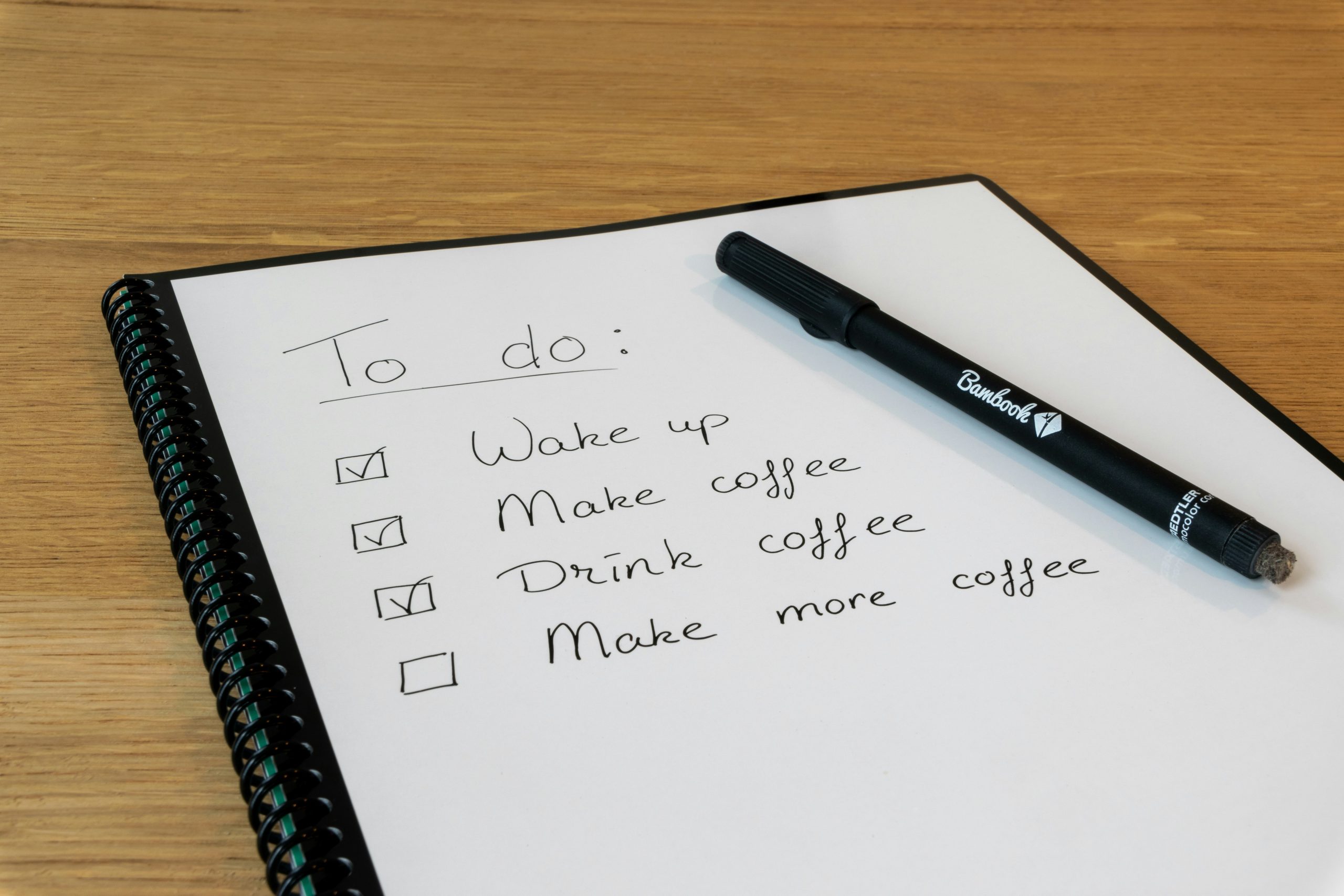
Write it down. Put it at the top of your list. Make the decision clear before you go to sleep, so you wake up knowing exactly what you’re doing first.
Step 2: Make It Your First Task of the Day
When you sit down to work, your frog is the first thing you open — not email, not Slack, not your inbox.
This requires protecting your morning. The time blocking method is a natural partner here: schedule a dedicated block (60–90 minutes minimum) for your frog at the start of your workday and treat it as a non-negotiable appointment.
Don’t let “just checking in quickly” steal your peak hours. Those peak hours are precisely when you should be eating your frog.
Step 3: Eliminate All Distractions Before You Start
Before you begin your frog task, remove every possible distraction:
- Put your phone on Do Not Disturb (or in another room)
- Close all browser tabs except what you need
- Turn off email notifications
- Use a site blocker if necessary
- Let your household know you’re unavailable for the next hour
This step matters more than people think. Even a brief interruption — a glance at your phone, a notification ping — breaks your concentration and can cost you significant recovery time, according to research on workplace interruptions cited by Harvard Business Review.
Step 4: Work in Focused Blocks Until It’s Done
Don’t stop partway through. The eat the frog method works because you actually finish your most important task — not because you start it.
If the task is large, break it into smaller chunks and eat each chunk until the whole frog is gone. Use timed work sessions (60–90 minutes) with short breaks. When the session ends, take a proper break, then return.
You can combine this with the GTD method — GTD helps you clarify and organize all your tasks, while the eat the frog method helps you decide which one to attack each day.
Step 5: Review and Adjust Your System Weekly
Once a week — Friday afternoons or Sunday evenings work well — review how the week went:
- Did you eat your frog every day?
- Were you picking the right frogs — tasks that actually moved things forward?
- Were there days where you struggled? What got in the way?
Adjust accordingly. Some weeks your frog will be obvious. Others you’ll need to use the Eisenhower Matrix to help prioritize between competing tasks before identifying which one deserves pole position.
Conclusion
The eat the frog method isn’t a complicated system. It’s a single, powerful discipline: identify your most important task, do it first, and protect the time to finish it.
For remote workers, this method is particularly powerful because it removes the dependency on external structure — no manager scheduling your day, no office environment creating forced focus. You create the discipline yourself, every morning.
Start tonight. Write down tomorrow’s frog. When you sit down to work tomorrow, open that task first. That’s it. The rest will follow.
Frequently Asked Questions
What exactly is the eat the frog method?
The eat the frog method is a productivity strategy where you identify your most important (and often most dreaded) task and complete it first thing in the morning, before tackling anything else. The idea is that your mental energy is highest early in the day, making it the ideal time for your toughest work.
Who invented the eat the frog method?
The phrase is attributed to Mark Twain, but the productivity method was popularized by Brian Tracy in his book Eat That Frog! published in 2001. Tracy adapted the concept into a structured time management approach for professionals.
What should I do if I have multiple important tasks?
When you have several candidates for your frog, use urgency and impact as your filters. The Eisenhower Matrix is a useful tool here — your frog should typically come from the “Important, Not Urgent” quadrant, since those tasks tend to be the ones that get perpetually pushed aside.
Can the eat the frog method work alongside other systems like GTD?
Yes — they complement each other well. GTD helps you capture and organize all your commitments, while the eat the frog method helps you determine which single item to prioritize at the start of each day.
What if I don’t know what my most important task is?
That’s often a sign you need to step back and clarify your goals. Ask yourself: “What would make tomorrow a success?” or “What one thing, if I did it, would make everything else easier or less necessary?” Answer that honestly and you’ll find your frog.
About the author: Alex is a software developer who has worked remotely for three years. He started Deep Focus Daily to document the productivity systems that actually survive real remote work — not the advice written for offices that no longer exist. Learn more about Deep Focus Daily →