
For years, multitasking was treated as a superpower. The more plates you could spin, the more productive you appeared. But the science tells a different story — and it’s been telling it for two decades.
Understanding single tasking vs multitasking isn’t just an academic exercise. It’s the foundation of how high-performing remote workers actually structure their days. In this guide, you’ll get 5 reasons to stop multitasking, plus a practical system for switching to single-tasking permanently.
If you’ve ever ended a day feeling busy but unproductive, this is the article that explains why — and what to do about it.
Quick Overview: Single Tasking vs Multitasking
| Factor | Single Tasking | Multitasking |
|---|---|---|
| Output quality | High | Lower |
| Error rate | Low | Higher |
| Time to completion | Faster per task | Slower overall |
| Mental fatigue | Lower | Higher |
| Stress levels | Lower | Higher |
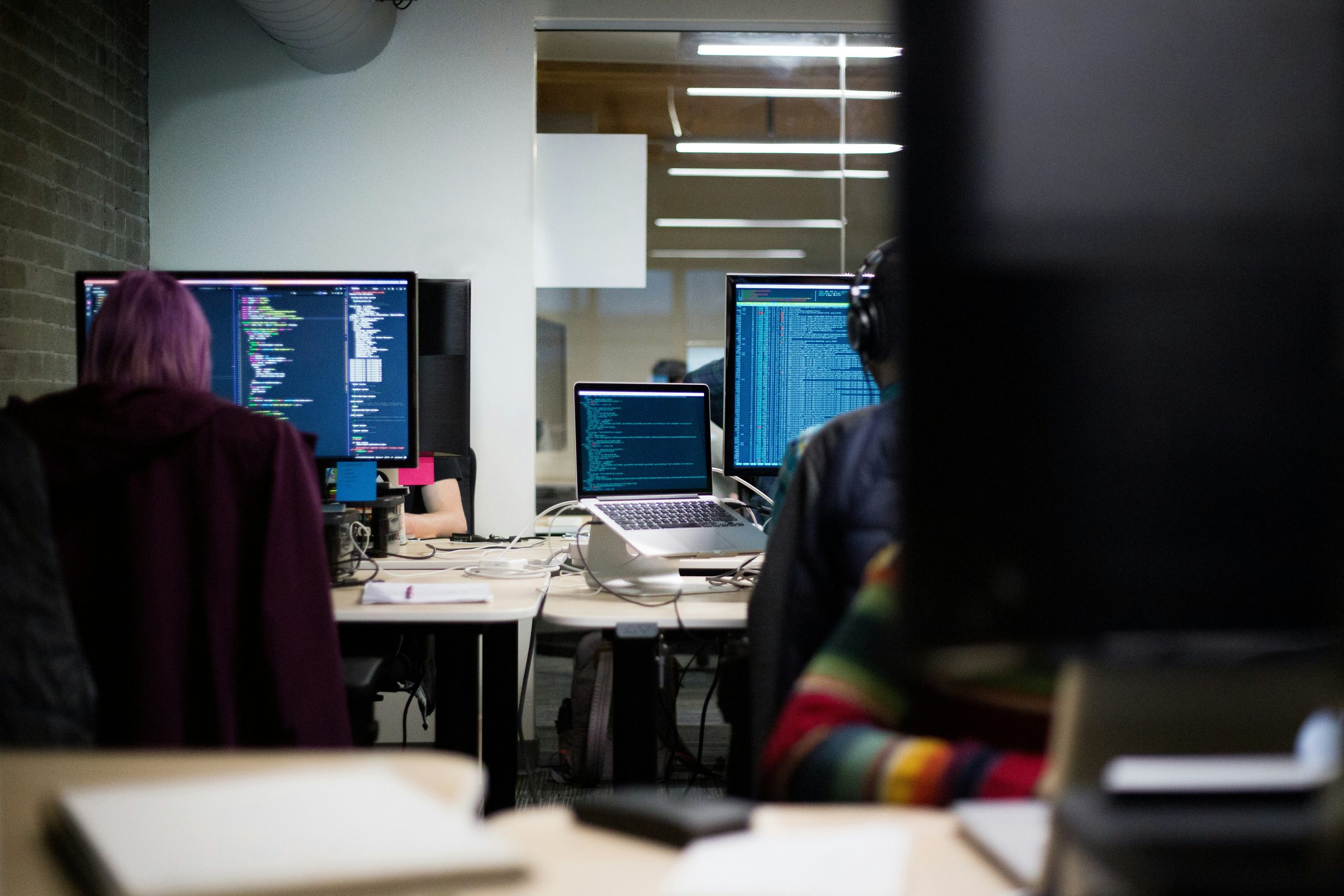
What Neuroscience Says About Multitasking
The human brain cannot perform two cognitively demanding tasks simultaneously. What we call “multitasking” is actually rapid task-switching — the brain toggling back and forth between activities, each switch incurring a mental cost.
The American Psychological Association notes that task-switching can cost as much as 40 percent of someone’s productive time. In a 2009 study in PNAS, Stanford researchers Eyal Ophir, Clifford Nass and Anthony Wagner found that people who reported heavy media multitasking did worse at filtering out irrelevant information and, surprisingly, at switching tasks than light multitaskers. Later studies have been mixed on how large that difference is.
The more you multitask, the worse you get at the skills multitasking demands.
5 Reasons to Choose Single Tasking Over Multitasking
1. Single Tasking Produces Higher-Quality Work
When your brain is fully committed to one task, the quality of your thinking improves dramatically. You catch errors you’d miss while juggling. You follow complex ideas to their logical conclusion. You write clearer sentences, make better decisions, and produce more thorough analysis.
Multitasking produces superficial engagement with everything. Single tasking produces deep engagement with one thing. For knowledge workers, the output quality difference is significant — and your colleagues and clients will notice.
2. You Actually Finish Tasks Faster
This feels counterintuitive, but it follows from the switching cost above. When you single-task, you skip the time lost re-orienting every time you jump between three tasks.
The reason is context-switching cost. Every time you leave a task and return to it, your brain spends time reloading context, finding your place, and rebuilding momentum. Do this repeatedly across a day and you add hours of invisible overhead to your workload.
Combining single tasking with the task batching method amplifies this effect. When similar tasks are grouped together, context-switching cost drops further because your brain stays in the same mental mode.
3. Your Error Rate Drops Significantly
Divided attention is one of the primary causes of preventable errors. Whether it’s a typo in a client email, a calculation mistake in a spreadsheet, or a missed detail in a contract, errors cluster around moments of split focus.
Single tasking forces you to be fully present with what you’re doing. When your full attention is on one document, one piece of code, or one message, you’re processing it more thoroughly and catching mistakes in real time rather than discovering them later.
4. You Experience Less Mental Fatigue
The mental exhaustion that comes from a day of multitasking isn’t just from working hard — it’s from the constant overhead of switching. Every task switch depletes cognitive resources. By 3pm, you’re running on empty, even if you haven’t done anything particularly difficult.
Single-taskers report feeling less drained at end of day, even when they’ve processed the same volume of work. The difference is how they processed it — in sustained focused sessions rather than scattered bursts.
This directly impacts your long-term sustainability as a remote worker. Chronic multitasking is a direct path to burnout. Single tasking is a direct path to durable performance.
5. You Can Actually Enter a Flow State
Flow — the state of peak concentration and performance — is impossible to reach while multitasking. Flow requires sustained, uninterrupted focus on a single demanding task. Interrupt that focus, and you’re back to square one.
Every time you check a notification, switch apps, or respond to a message mid-task, you destroy the conditions that allow flow to emerge. Single tasking is the prerequisite for getting into a flow state. Without it, peak performance stays permanently out of reach.
How to Switch to Single Tasking: A Practical System
Step 1: Define One Active Task at a Time
At the start of each work block, write down the single task you’re working on. Not a list — one task. Put it where you can see it. Any time you feel the pull to switch, look at it and return.
Step 2: Close Everything That Isn’t That Task
Close every browser tab, app, and window that isn’t directly needed for the task at hand. Email closed. Slack closed. Social media gone. Your screen should contain only what you’re working on.
Step 3: Use a Capture System for Interrupting Thoughts
One reason people multitask is anxiety about forgetting other things. The fix: keep a notepad or a simple capture tool open in the background. Any time a new thought, task, or idea surfaces during your session, write it down quickly and return to your focus. Don’t act on it — just capture it so your brain can let go.
Step 4: Set a Clear End Point
Single tasking is easier when you know when it ends. Set a timer for 60–90 minutes. Work on your single task until the timer sounds. Then stop, review, and decide what’s next. This structure removes the anxiety of “am I spending too long on this?” because the session length is defined in advance.
Conclusion
The single tasking vs multitasking debate isn’t really a debate. For work that needs real thought, the research on switching costs points one way: multitasking tends to cost you quality, speed and accuracy. Routine tasks, like folding laundry during a call, are the exception.
Single tasking isn’t about doing less. It’s about doing one thing at a time, fully, and moving on. Start tomorrow: pick your most important task, close everything else, and work on it for 90 minutes without switching. See what your actual output looks like when you stop dividing your attention.
Frequently Asked Questions
Is multitasking ever actually useful?
Yes, in limited scenarios. Multitasking works when at least one task is automatic and requires no conscious attention — like walking while listening to a podcast. The problem is that most knowledge work tasks all require cognitive engagement. Combining two demanding tasks always results in degraded performance on both.
How do I handle urgent interruptions if I’m single-tasking?
Distinguish between genuinely urgent (a client emergency, a system outage) and just timely (a new email, a Slack ping). True urgencies warrant interrupting your task. Everything else can wait until your designated communication window. Most things that feel urgent in the moment are not actually urgent.
Why does multitasking feel productive if it’s not?
Because it creates a feeling of busyness. Switching between tasks generates novelty and stimulation, which the brain interprets as progress. But feeling busy and being productive are very different things. Single tasking often feels slower in the moment and delivers dramatically better results by end of day.
Can I retrain my brain to single-task if I’ve been multitasking for years?
Most people can, with practice. Start with short single-tasking sessions (30–45 minutes) and gradually extend them. The discomfort you feel at first is normal — your brain is accustomed to the stimulation of task-switching. That discomfort fades within a few weeks of consistent practice.
What tools help with single tasking?
The most effective ones are the simplest: a physical notepad for capturing thoughts, a site blocker like Cold Turkey or Freedom for eliminating digital temptations, and a timer to define session boundaries. You don’t need a complex system — you need fewer inputs competing for your attention at any given moment.
About the author: Alex is a software developer who has worked remotely for three years. He started Deep Focus Daily to document the productivity systems that actually survive real remote work — not the advice written for offices that no longer exist. Learn more about Deep Focus Daily →