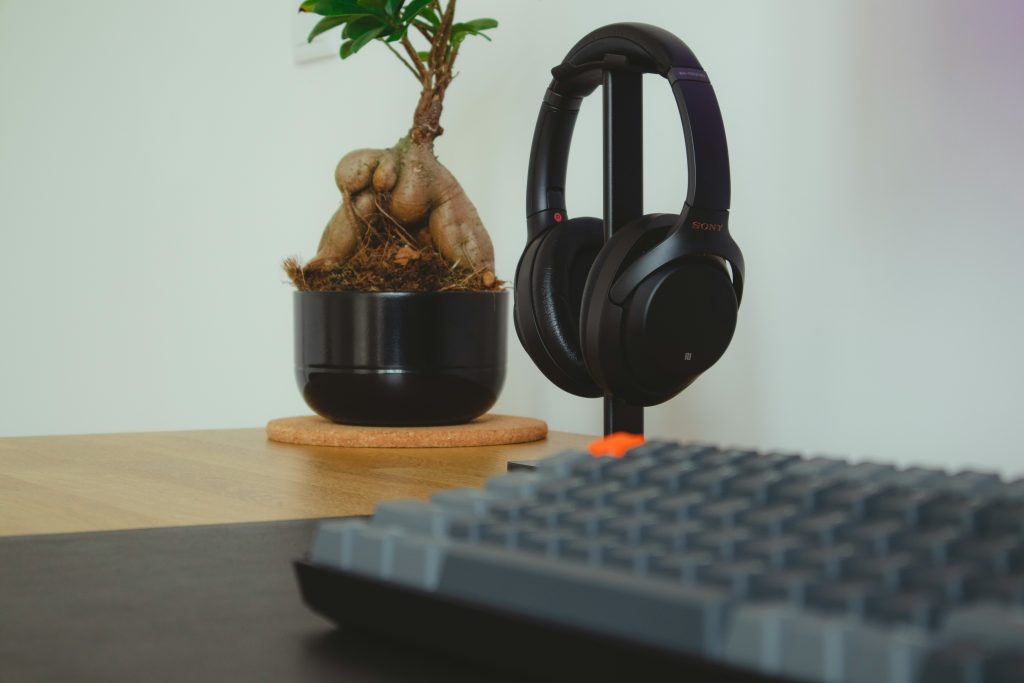
Focus music for work isn’t just background noise — the right soundtrack can be the difference between staring at a blinking cursor and finishing your to-do list an hour early. This guide covers which genres tend to work for focused tasks, what the limited research does and doesn’t say, how to build a playlist that helps you concentrate, and when music might be hurting your focus instead of helping it.
If you’ve ever tried a completely silent office and found it more distracting than helpful, you’re not imagining things. The right music can mask distracting background noise, create a consistent cue for your brain to enter deep work mode, and even make repetitive tasks feel less tedious. The wrong kind can do the opposite — pulling your attention away from the task in front of you.
It breaks down five genres, explains the trade-offs behind each, and gives you a step-by-step way to build and test your own playlist. Evidence on music and concentration varies a lot from person to person, so treat every suggestion here as an experiment.
Quick Overview: 5 Genres for Deep Concentration
Here’s a fast breakdown of the five genres of focus music for work covered in this guide, and which work style each one suits best.
| # | Genre | Best For |
|---|---|---|
| 1 | Classical & Instrumental | Deep, analytical thinking |
| 2 | Lo-fi Hip-Hop | Repetitive or administrative tasks |
| 3 | Ambient & Drone | Long, uninterrupted deep work sessions |
| 4 | Nature Sounds & White Noise | Noisy or open-plan offices |
| 5 | Video Game Soundtracks | Creative work and writing |
Why Focus Music for Work Actually Helps You Concentrate
Researchers have studied the link between music and concentration for decades, and the consensus is nuanced: music doesn’t universally help focus, but the right kind, played the right way, can measurably improve it — especially for repetitive or moderately demanding tasks.
Harvard Health Publishing has a general overview of how music affects mood and health. For focus, the practical question is a trade-off: a little stimulation boosts performance, but too much — like music with lyrics or sudden volume changes — can overload your working memory and pull you out of flow.
Streaming services now build whole categories of focus and study playlists, which tells you how many people already use music this way. Good focus music needs to be predictable, mostly instrumental, and low in emotional intensity so it doesn’t compete with your prefrontal cortex.
The bottom line is that focus music for work isn’t about finding your favorite songs — it’s about finding the right sonic environment for the specific task in front of you.
5 Genres of Focus Music for Work
Not all music is created equal when it comes to concentration. These five genres are the ones most often recommended for focused work, each with a different trade-off.
1. Classical & Instrumental
Classical music, especially Baroque-era pieces by Bach or Vivaldi, has a steady tempo — usually 50 to 80 beats per minute — that mirrors a relaxed resting heart rate. This steadiness is why it’s often the first recommendation for deep, analytical work like writing reports or reviewing code.
Try: Bach’s Brandenburg Concertos, film scores, or solo piano playlists.
2. Lo-fi Hip-Hop
Lo-fi hip-hop, the genre behind those “beats to study/relax to” livestreams, combines a slow, repetitive beat with muffled, textured production. The repetition means your brain stops actively processing it after a few minutes, which makes it ideal for administrative tasks, email, or light editing.
Try: Any lo-fi hip-hop radio playlist on YouTube or Spotify.
3. Ambient & Drone
Ambient and drone music strips away melody and rhythm almost entirely, leaving long, slowly evolving tones. Because there’s no beat to follow, it’s one of the least distracting options for long, uninterrupted sessions — the kind you’d use to enter a deep work state.
Try: Brian Eno, Stars of the Lid, or algorithmic ambient apps built specifically for concentration.
4. Nature Sounds & White Noise
Rain, ocean waves, and white or brown noise work differently than music — they mask distracting sounds rather than engaging your attention. This makes them a strong choice for noisy or open-plan offices, or for anyone who finds full silence unsettling.
Try: Coffee shop ambiance, rainfall recordings, or a dedicated white noise app.
5. Video Game Soundtracks
Modern game soundtracks are engineered to keep players immersed for hours without becoming tiring or repetitive — which happens to be exactly what focused, creative work requires. They tend to be melodic without lyrics, making them a good middle ground between classical and lo-fi.
Try: Scores from games like Stardew Valley, Journey, or Minecraft.
Whichever of these five genres you land on, the goal of focus music for work is the same: give your brain enough stimulation to stay engaged, without enough novelty to pull your attention away from the task itself.
Best Apps and Tools for Instrumental Focus Playlists
You don’t have to build every playlist from scratch. A handful of apps are purpose-built to deliver focus music for work without the trial and error of searching manually every time you sit down.
Spotify and YouTube Music both host enormous libraries of pre-made lo-fi, classical, and ambient playlists, updated constantly by both the platforms and independent curators. Searching “deep focus” or “instrumental study” inside either app is usually enough to get started within a minute or two.
Brain.fm takes a more scientific approach. Instead of licensed songs, it generates algorithmic soundtracks engineered around neural entrainment — patterns designed to nudge your brainwaves toward a focused state. It’s a paid tool, but many users find it more consistent than curated playlists precisely because every track is built around the same underlying goal, rather than a mix of unrelated songs with different tempos and production styles.
Endel and myNoise are worth trying if nature sounds or white noise work better for you than melody-based tracks. Both let you blend and adjust ambient layers — rain, wind, low hums — in real time, rather than sticking to a single fixed loop that eventually becomes as distracting as silence itself.
Whichever app you choose, the goal stays the same: consistent, low-friction access to focus music for work so you’re not wasting attention deciding what to listen to before you’ve even started the task.
How to Build a Playlist for Deep Concentration
Picking a genre is only half the equation. How you structure your playlist matters just as much as what’s on it.
Start with length. Build playlists in blocks of 45 to 90 minutes so you’re not interrupted mid-task to change the music, and pair each block with a dedicated work session rather than letting it run continuously in the background all day.
Keep lyrics out of your main rotation. Even in a language you don’t understand, the brain is wired to try to parse vocal patterns, which competes directly with tasks that involve reading or writing. Save lyrical music for repetitive, low-cognitive-load tasks only.
Match energy to task difficulty. Save higher-tempo tracks for tedious, low-stakes work, and reserve slower, sparser ambient or classical tracks for your hardest, most demanding tasks — the ones where you’re trying to get into a flow state.
If building a playlist manually feels like one more distraction, a dedicated app can do the curation for you automatically. Pairing your playlist with one of the best focus apps to block distractions — so notifications can’t interrupt your listening session — tends to produce the most consistent results.
Once you’ve built a solid rotation, save it. A reliable, repeatable focus music for work routine acts as a cue: your brain starts associating that specific playlist with concentration, making it easier to drop into work mode every time you press play.
When Music Doesn’t Help (And What to Do Instead)
Music isn’t a universal productivity fix, and for some tasks it can actively work against you.
Highly verbal tasks — writing, editing, or anything involving reading comprehension — are the most likely to suffer from music with lyrics. If you notice yourself losing your train of thought mid-sentence, that’s a sign to switch to an instrumental option or turn the volume down.
Some people are also more sensitive to auditory distraction than others. If you’ve tried several genres of focus music for work and still find yourself more distracted than before, silence — or simple white noise — might just be your best option, and that’s completely normal.
The key is testing, not assuming. Track which sessions felt most productive, and let that data decide whether music belongs in your routine at all, and in what form.
The Bottom Line on Focus Music for Work
Focus music for work isn’t a magic productivity hack, but it is one of the simplest, lowest-cost tools you have for shaping your attention. Start with one of the five genres above, match it to the task in front of you, and adjust based on what actually helps you concentrate rather than what you think should work.
Build a short rotation of two or three playlists, keep the volume low, and give yourself permission to switch to silence when a task calls for it. Over time, your focus music for work routine will become as automatic as sitting down at your desk — a quiet signal that it’s time to get to work.
Frequently Asked Questions
What is the best focus music for work?
The best focus music for work is usually instrumental, has a steady tempo, and avoids sudden changes in volume or intensity. Classical, lo-fi hip-hop, and ambient tracks consistently test well because they support attention instead of competing with it.
Does listening to music while working actually improve focus?
For most people, yes — especially with repetitive or moderately demanding tasks. Well-chosen focus music for work can mask background noise and create a consistent mental cue for concentration, though highly verbal tasks like writing may need a quieter, fully instrumental option.
Is lo-fi hip-hop actually good for concentration?
Yes. Lo-fi hip-hop is one of the most popular forms of focus music for work because its repetitive, low-key production fades into the background quickly, making it especially useful for administrative tasks, email, and light editing.
Should I avoid music with lyrics while working?
For reading- or writing-heavy tasks, yes — lyrics compete with the language-processing part of your brain. When you need focus music for work during those tasks, stick to instrumental classical, ambient, or video game soundtracks instead.
How loud should focus music be while working?
Keep the volume low enough that it stays in the background of your attention, not the foreground. If you find yourself noticing individual songs or lyrics, your focus music for work is too loud or too complex for the task at hand.
About the author: Alex is a software developer who has worked remotely for three years. He started Deep Focus Daily to document the productivity systems that actually survive real remote work — not the advice written for offices that no longer exist. Learn more about Deep Focus Daily →